_58787af5180b04a5580392b43d7be57f.png)
A cracked screen, a battery that dies by 2 PM, or a back panel that no longer sits flush usually points to one of three distinct failures: Ceramic Shield front glass fracture, Super Retina OLED panel degradation, or lithium-ion cell wear. This iPhone repair guide walks through what fails, why it fails, and how much each fix actually costs in Bengaluru, whether you go DIY, a local shop, or a certified doorstep technician.
Key Takeaways
- Screen and glass are two different layers: the Ceramic Shield front glass and the Super Retina XDR OLED panel underneath it are separate components — a cracked glass doesn't always mean the display module needs replacing.
- Battery health below 80% is the replace threshold: Apple's own lithium-ion cells are rated for roughly 500 full charge cycles before capacity drops meaningfully; unexpected shutdowns at 20%+ charge are a hardware sign, not a software bug.
- Ghost touch is rarely "just the glass": it's most often a damaged digitizer flex cable, moisture ingress, or in rarer A15–A18 Pro cases, a Tristar/Hydra power management IC drawing irregular current.
- Uncalibrated third-party panels break True Tone and Face ID: only OEM-grade assemblies with proper software pairing preserve full functionality after a screen swap.
- Onsite doorstep repair now matches in-shop turnaround: certified technicians can complete a screen or battery job in around 30 minutes at your home or office, skipping the Silk Board or Whitefield commute entirely.
At a Glance: iPhone Repair Options Compared
| Repair Route | Typical Turnaround | Parts Risk | Data Privacy | Warranty |
|---|---|---|---|---|
| DIY repair kit | 1-3 hours (first attempt) | High, generic glass, no calibration | You keep the device, but risk voiding Face ID | None |
| Unverified local shop | 30 min, 2 days | Variable, often aftermarket without disclosure | Device leaves your sight, data exposed | Rarely offered or informal |
| Apple Authorized Service Provider | Same day to 3-5 days | Low, genuine parts | Device leaves your sight | Apple-backed, but higher cost |
| HelloRe doorstep repair | ~30 minutes onsite | Low, OEM-grade, calibrated | Device never leaves your sight | Up to 12 months |
| HelloRe pickup & delivery | Same day, typically | Low, OEM-grade, calibrated | Sealed handoff with tracking | Up to 12 months |
What Actually Fails Inside an iPhone: Screen, Battery, and Glass Explained
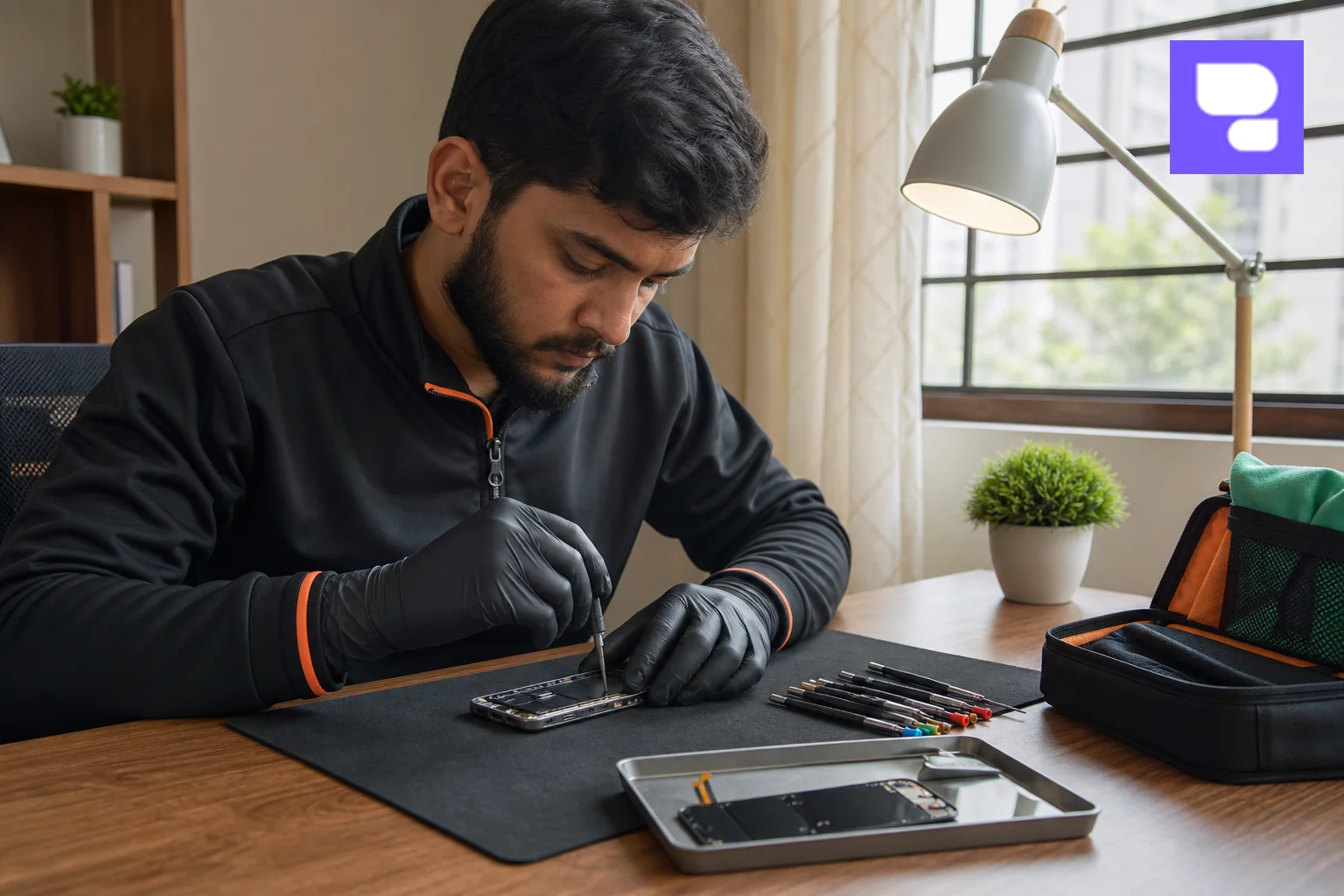
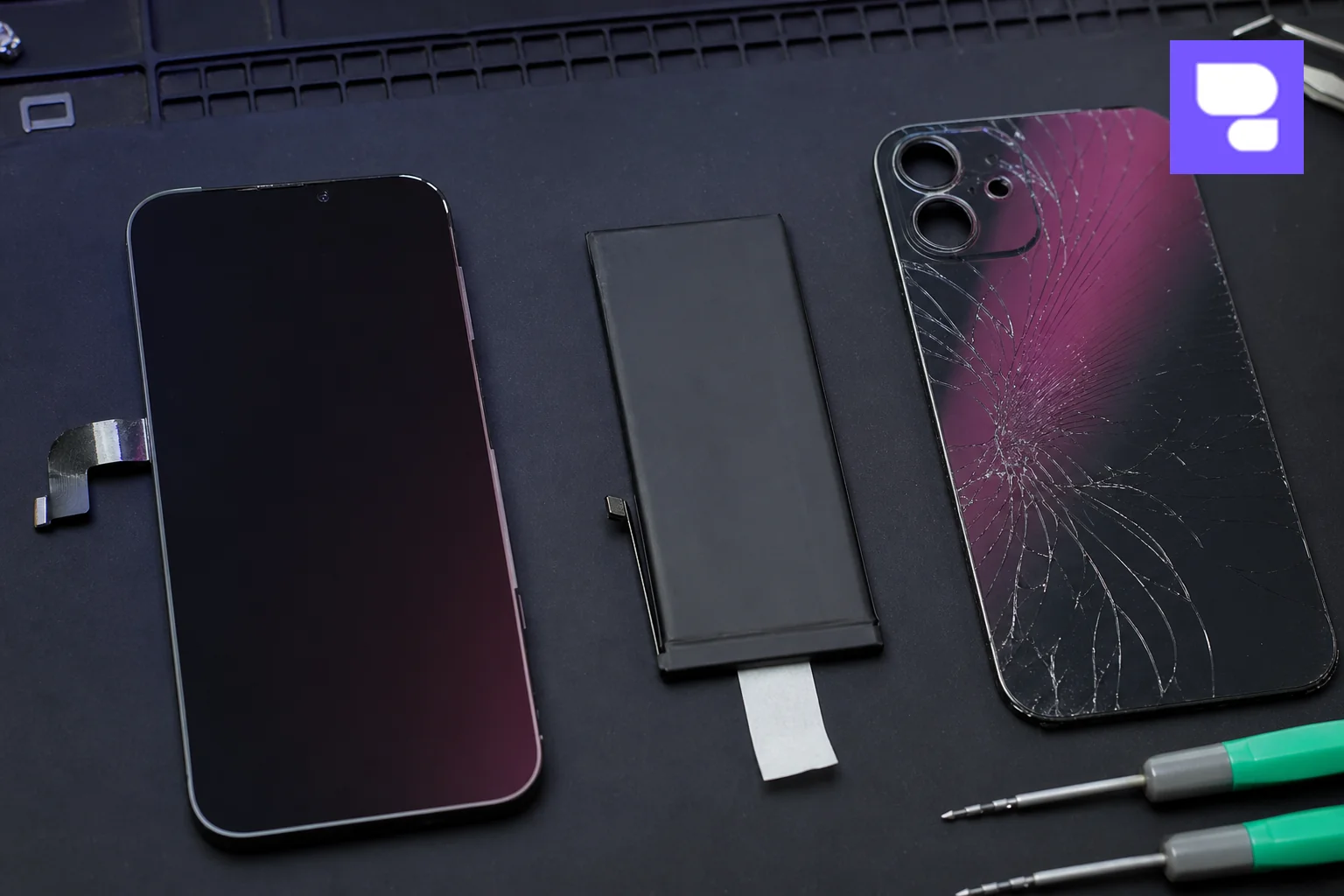
Most people say "the screen broke" without realizing an iPhone's front assembly has two layers doing different jobs. The Ceramic Shield, developed with Corning, is the outer glass that takes the physical impact. Underneath it sits the Super Retina XDR OLED panel, the actual light-emitting display. A drop can crack the Ceramic Shield while the OLED panel underneath still lights up perfectly, or the reverse: the glass survives but the panel shows discoloration, lines, or goes dark. This complex display structure is why any certified apple service center in Bangalore will run targeted diagnostic tests on both layers rather than doing a simple, blanket glass replacement.
The battery is a sealed lithium-ion pack rated in charge cycles, not months. One full cycle is a 0-100% discharge; however, it's spread across a day. Apple states cells retain up to 80% of original capacity at 500 cycles under normal conditions; after that, capacity and peak power delivery both decline, which is why an aging phone throttles under load even when it's "charged."
The back glass isn't just cosmetic. Since the iPhone 8, Apple laser-fuses the rear glass to the aluminum or stainless steel frame, and it forms part of the antenna and MagSafe/wireless charging assembly. A cracked back panel can quietly degrade wireless charging efficiency long before it looks bad enough to bother fixing.
Chip generation matters too. From the A15 Bionic through the A18 Pro, Apple has moved power management duties across a family of ICs commonly nicknamed Tristar and Hydra in the repair trade. When these ICs draw current incorrectly, symptoms mimic a battery problem, fast drain, hot charging, phone stuck at a fixed percentage, even though the battery itself tests healthy.
Why iPhones Fail: Root Causes Behind Common Symptoms
Ghost touch, the screen registering taps you never made, is usually caused by one of three things: a torn digitizer flex cable from a drop, moisture that crept past a compromised seal, or a poorly manufactured aftermarket glass panel applying uneven pressure on the connector. It is rarely fixed by "just replacing the glass" if the flex cable underneath is already damaged.
The "Green Screen of Death", a green or discolored tint across the display, sometimes with flickering, points to a failing OLED driver IC or a backlight circuit fault, not the glass at all. This is a display module issue and needs a full panel swap, not just glass polishing.
Tristar/Hydra IC failures show up as a phone that charges erratically, gets unusually hot on the charger, or shows a lightning-bolt icon without actually gaining charge. This is a logic board-level fault, closer in nature to what we've covered in MacBook logic board repair diagnostics, where a single failing IC mimics a battery or charging problem.
Battery swelling is a safety issue, not a performance one. If the screen looks like it's lifting slightly at the edges without a drop event, stop charging the phone and get it inspected, a swollen lithium-ion cell can pressure the display and, in rare cases, become a fire risk.
1. How to Diagnose the Problem Before You Pay for Repair
Before booking any repair, run through this quick sequence. It takes under five minutes and tells you which component is actually failing.
- Check Battery Health: Go to Settings > Battery > Battery Health & Charging. A "Maximum Capacity" below 80%, or a "Peak Performance Capability" warning, confirms cell degradation.
- Inspect the Ceramic Shield visually: Tilt the phone under a bright light. Spiderweb cracks radiating from an impact point are glass-only; a uniform haze or discoloration under the glass usually means the OLED panel is compromised.
- Test for ghost touch: Open a blank Notes page and watch for lines or taps appearing without contact. If it happens near a specific edge, suspect a flex cable or connector issue.
- Watch charging behavior: Erratic charging speed, sudden stops, or heat during charging on a genuine cable suggest a power IC problem, not just a worn battery.
- Post-repair check for True Tone/Face ID: If you've already had a screen replaced elsewhere and Face ID or True Tone shows "unavailable" in Settings, the replacement wasn't properly calibrated to the original panel.
2. iPhone Screen Repair Cost in Bengaluru: DIY vs Local Shop vs Doorstep Service
Screen repair pricing swings widely across Bengaluru depending on where you go and what part actually gets used. A shop near Silk Board might quote a number that sounds attractive until you notice it's for a generic LCD-style panel, not an OLED match for your model.
| Route | Panel Quality Typically Used | True Tone/Face ID Retained? | Best Suited For |
|---|---|---|---|
| DIY kit | Aftermarket, unverified grade | Rarely calibrated correctly | Confident hobbyists, non-critical devices |
| Local unbranded shop | Mixed, depends entirely on shop | Inconsistent | Budget-first repairs on older models |
| Apple Authorized Center | Genuine Apple parts | Yes | Devices still under AppleCare+ |
| HelloRe doorstep/store | OEM-grade, calibrated onsite | Yes, recalibrated during repair | Most iPhone owners wanting speed + reliability |
DIY kits look cheap on paper, but the real cost shows up later: a panel that develops ghost touch within weeks, a Face ID that never works again, or a seal that lets in monsoon moisture. For anyone weighing this decision for a laptop screen too, the logic is similar to what we outline in our MacBook doorstep repair guide, the part quality and calibration step matter more than the sticker price.
Ask us directly for current model-specific pricing through Contact Us, since exact costs vary by iPhone generation and panel type.
3. Battery Replacement: When to Fix, Diagnostic Signs, and What It Costs
A battery worth replacing shows a specific pattern, not a vague "feels slower" complaint. Look for:
- Maximum Capacity reading under 80% in Battery Health settings
- Unexpected shutdowns at 15-30% remaining charge
- Visible bulging or a screen that no longer sits flat against the frame
- Noticeably slower app launches under Peak Performance Capability throttling
Lithium-ion chemistry degrades on a curve, not a cliff, capacity loss accelerates after roughly 500 cycles, which for a daily user typically lands somewhere between 18 and 30 months of ownership depending on charging habits. Fast, frequent full-cycle charging accelerates wear faster than shorter top-up charges.
Cost varies by iPhone generation, since battery capacity and assembly complexity differ across models. Get an exact quote for your specific model through View all iPhone Repairs, HelloRe's technicians test cycle count and capacity onsite before recommending a swap, so you're not paying for a replacement you don't need.
4. Back Glass Replacement and Why It's Trickier Than It Looks
Back glass repair sounds simple until you realize how it's built. Since the iPhone 8, Apple laser-fuses the rear panel directly to the metal frame rather than using a removable cover. That means a proper back glass replacement involves precisely melting the adhesive bond, lifting the old glass without damaging the antenna lines underneath, and re-sealing without disturbing MagSafe alignment or wireless charging coils.
This is exactly why many local shops, when a customer walks in with a cracked back panel, quietly quote a "full housing swap" instead, it's easier for them, but it usually costs far more than necessary and can mean losing your original serial-matched components. A technician trained specifically on back glass laser-fusion techniques can do the targeted repair instead, preserving your phone's original housing and antenna tuning.
If you're also dealing with a battery or screen issue at the same time, a common combo after a drop, it's worth getting all three inspected in one visit rather than three separate trips.
5. The Hidden Risks of DIY Kits and Unverified Local Shops
Saving money upfront on a screen or glass repair often costs more later. Here's what typically goes wrong:
- Ghost touch within weeks: generic third-party glass applies uneven pressure on the digitizer, triggering phantom taps that weren't there on day one.
- Data exposure: handing your unlocked phone to an unverified shop means your photos, messages, and banking apps are out of your control for hours or days.
- Broken True Tone/Face ID: without proper calibration software and OEM-grade sensors, these features can silently stop working after a screen swap and rarely get flagged by the shop doing the work.
- Time lost in traffic: a round trip to a shop near Indiranagar or Whitefield during peak hours can eat two to three hours you didn't plan to spend, on top of the wait for the repair itself.
None of this means every local shop is bad, many are competent. But without visible certification, warranty terms, or transparent parts sourcing, you're taking a gamble with a device you likely use for work, banking, and family photos.
6. Why HelloRe's Onsite Doorstep Repair Solves This Differently
HelloRe's certified technicians carry OEM-grade panel assemblies, calibration tools, and battery testing equipment directly to your home or office anywhere in Bengaluru, including areas around Silk Board, Indiranagar, and Whitefield where shop commutes eat up entire afternoons. Most screen and battery jobs are completed onsite in roughly 30 minutes.
Three things separate this from a typical local shop visit:
- True Tone and Face ID recalibration: every screen swap includes the pairing step that keeps these features functional, not just the physical glass swap.
- 100% data-privacy model: your device stays in your line of sight throughout the repair. Nothing gets carried off to a back room.
- Up to 12-month warranty: backed transparently, so a fault showing up weeks later doesn't mean starting over with a new shop.
If you'd rather not wait at home, the Book a Repair Now! pickup & delivery option collects your device, completes the repair at HelloRe's HSR Layout facility, and returns it the same day in most cases. Either way, the same certified process and warranty applies.
This same philosophy, certified parts, transparent pricing, and calibrated repairs, extends across other Apple devices too. If your iPad screen cracked in the same drop, check our iPad screen repair doorstep guide, and if it's an Apple Watch or AirPods that took the hit, we cover those in our AirPods repair guide as well.
Frequently Asked Questions
Does a third-party screen replacement affect Face ID?
It can. Face ID depends on a calibration pairing between the original display and the True Depth camera system. Replacements without proper software calibration frequently trigger a "Face ID unavailable" warning even when the new glass looks fine.
Is battery replacement safe once AppleCare+ has expired?
Yes, as long as the technician uses a properly rated lithium-ion cell and follows correct handling procedures. A swollen or damaged battery is actually more of a safety risk left unreplaced than a professionally swapped one.
Can back glass be replaced without swapping the entire housing?
Yes, with the right laser-fusion removal technique, a technician can replace just the rear glass while preserving your original frame, antenna lines, and MagSafe alignment. Not every shop offers this, many default to a full housing swap because it's simpler for them.
How long does an onsite iPhone screen repair actually take?
Most screen and battery replacements at your home or office take about 30 minutes from disassembly to final calibration check, assuming parts are already carried by the technician.
What if my iPhone has multiple issues, screen, battery, and back glass, at once?
Get all three diagnosed in a single visit. Drops that crack a screen often stress the battery seating and back glass too, and bundling the inspection saves a second trip.
A cracked Ceramic Shield, a battery stuck at 79% health, or a back glass that no longer sits flush don't have to mean a lost afternoon at a shop across town. Repair My Device Now! and get a certified technician to diagnose and fix your iPhone's screen, battery, or glass at your home or office anywhere in Bengaluru, with OEM-grade parts, full True Tone and Face ID recalibration, and up to 12 months of warranty backing the work. If your MacBook needs similar attention, our MacBook battery replacement cost breakdown covers that too, either way, Contact Us and stop guessing which repair route to trust.